
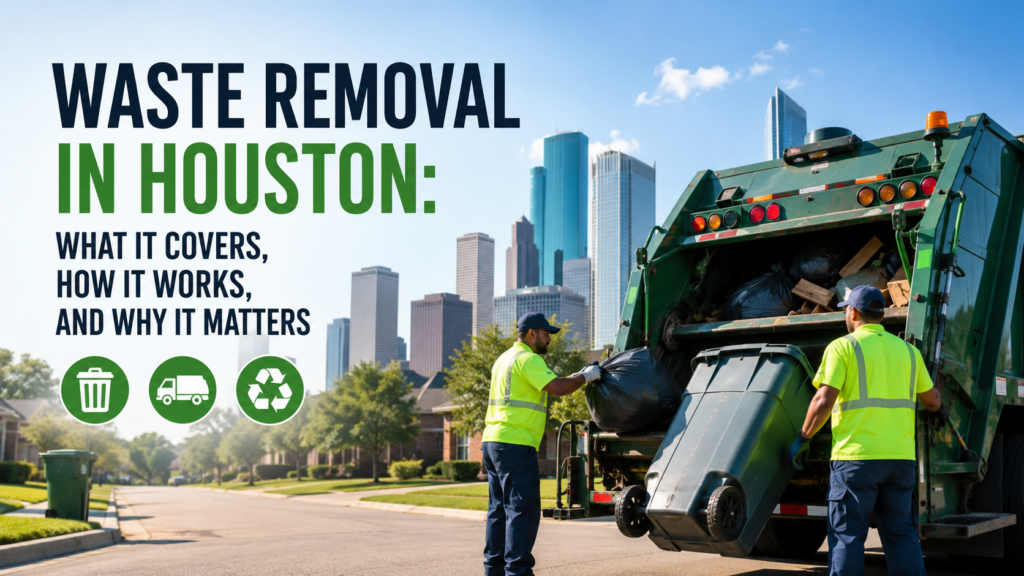
Waste removal is one of the most fundamental services supporting construction, renovation, demolition, and property management activities across the Greater Houston area. Whether it is concrete rubble from a demolished driveway, debris from a storm-damaged roof, accumulated materials from a renovation project, bulk junk from a property cleanout, or organic yard waste from land clearing, Waste Removal Houston is the service that gets it loaded, hauled away, and properly disposed of or recycled. In Houston a city of extraordinary scale and diversity, with one of the most active construction markets in the country professional waste removal services are in constant demand. This guide explains what waste removal covers in the Houston context, the systems and regulations that govern it, and how different types of waste are managed.
The Scope of Waste Removal in Houston
Waste removal in the Houston construction and property context covers a broad range of materials and scenarios. Construction and demolition debris concrete, wood, drywall, metal, roofing material, insulation, and mixed construction waste represents the highest volume category. Houston’s ongoing new construction, renovation, and demolition activity generates millions of tons of construction and demolition debris annually across the metro area.
Bulk junk and accumulated property waste furniture, appliances, electronics, yard debris, and general accumulated material is handled by junk removal and property cleanout services. This category encompasses estate cleanouts, rental property turnovers, hoarder situations, and residential and commercial cleanups of all types.
Yard waste and organic debris from land clearing, storm cleanup, and landscaping work is another significant category in Houston, where the region’s warm, humid climate supports rapid and vigorous vegetation growth and where tropical storm systems periodically generate enormous volumes of fallen trees, damaged vegetation, and organic debris across the metro area.
Industrial and commercial waste from manufacturing operations, food processing facilities, and commercial businesses generates a distinct waste stream with specific handling requirements depending on the material composition. Houston’s concentration of petrochemical, manufacturing, and logistics operations in the Bayport, Ship Channel, and industrial districts creates significant industrial waste management demand.
How Houston’s Waste Management System Works
Houston’s waste management infrastructure encompasses multiple layers municipal solid waste collection, private waste hauling and disposal services, recycling facilities, and specialized handling for specific waste categories. The City of Houston provides solid waste collection for residential properties and some commercial customers through its Solid Waste Management Department, but the vast majority of construction and demolition debris, bulk junk, and commercial waste is handled by private waste removal services using roll-off containers, dump trucks, and other specialized equipment.
The City of Houston operates several household hazardous waste collection facilities where residents can drop off paints, chemicals, pesticides, batteries, and other materials that cannot go in regular trash. These facilities are distinct from the general construction debris disposal infrastructure and serve a specific need for materials that require special handling due to their chemical or environmental hazard potential.
Harris County and surrounding counties have networks of permitted solid waste disposal facilities landfills, transfer stations, and material recovery facilities that receive construction and demolition debris, general solid waste, and sorted recyclable materials from private haulers. Professional waste removal services in Houston maintain established relationships with these facilities and understand which facilities accept which types of material, what the disposal and tipping fees are, and what documentation is required for regulated material streams.
Construction and Demolition Debris Recycling in Houston
The Houston construction market supports active recycling infrastructure for the most common construction and demolition debris materials. Concrete recycling is among the most developed pathways multiple facilities in the Houston area receive and crush concrete from demolition and breaking operations, producing recycled concrete aggregate (RCA) that is used as base material for roads, parking lots, and development sites across the metro area. The demand for recycled aggregate in Houston’s active construction market makes concrete recycling both economically viable and environmentally beneficial.
Metal recycling through scrap dealers and metal recycling facilities is another active Houston waste diversion pathway. Structural steel, rebar, aluminum, copper, and other metals from construction and demolition work have market value that partially offsets disposal costs. Houston’s industrial heritage has supported a robust scrap metal industry, and professional waste removal services regularly sort and deliver metals to recycling facilities as part of comprehensive debris management.
Clean wood waste can be processed into mulch at several Houston-area facilities, with the resulting mulch distributed for landscaping applications. This pathway diverts wood waste from landfill and produces a useful landscape product.
Electronic waste computers, televisions, phones, and other electronics must be handled through specific e-waste recycling channels rather than general waste disposal. Houston has several e-waste recycling programs and collection events, and responsible waste removal services identify and segregate electronics for appropriate disposal.
Flood Debris Removal A Houston-Specific Context
Hurricane Harvey in 2017 generated an estimated 8 million cubic yards of debris from Harris County alone one of the largest debris removal operations in American history. The combination of flood-damaged household contents, construction debris from damaged structures, vegetative debris from downed trees, and damaged vehicles created an unprecedented waste management challenge that strained every available resource across the region.
Houston’s susceptibility to tropical weather and the flooding associated with it means that flood debris removal is a recurring element of the city’s waste management experience. Tropical storms, named hurricanes, and less dramatic but still significant rain events continue to generate flood debris removal demand across the region. Professional waste removal services with experience in flood debris management understand the logistics, the regulatory requirements for flood waste disposal, and the particular handling requirements for material contaminated with floodwater.
FEMA’s debris removal programs provide reimbursement for eligible debris removal activities following presidentially declared disasters, and the City of Houston and Harris County have established protocols for coordinating FEMA-eligible debris removal operations during and after major events. The 2017 Harvey response established new benchmarks for Houston’s debris removal capacity and led to improved pre-positioning of resources for future events.
Regulated Waste in Houston’s Construction Context
Not all waste in the Houston construction context is simple solid waste that can go to a general landfill. Several categories of material encountered in construction, demolition, and property cleanout work require specific handling and disposal routes.
Asbestos-containing material (ACM) common in Houston’s pre-1980 residential and commercial building stock must be removed by licensed asbestos abatement contractors and disposed of at facilities permitted to receive asbestos waste. TCEQ regulations govern asbestos waste disposal in Texas, and documentation of proper disposal must be maintained. Professional waste removal services do not handle asbestos waste this material requires the involvement of licensed abatement contractors.
Lead paint debris from renovation or demolition of pre-1978 structures must be handled in accordance with EPA and OSHA worker protection standards. Lead-contaminated debris may go to general construction debris disposal facilities in most cases, but workers must be protected from lead dust exposure during the handling process, and the waste stream must be properly characterized.
Petroleum-contaminated soil and materials from underground storage tank removals, spill cleanups, and contaminated site work require management under TCEQ’s environmental remediation programs. This material cannot be disposed of at general solid waste facilities and must be transported to permitted facilities or treated on site under appropriate regulatory authorization.
Frequently Asked Questions About Waste Removal in Houston
What materials can be recycled during a construction waste removal project in Houston? Concrete, steel and other metals, clean wood, cardboard, and in some cases gypsum drywall are the primary recyclable materials from Houston construction projects. Concrete is recycled as crushed aggregate, metals through scrap channels, and wood as mulch. A waste removal contractor who actively sorts and recycles these streams can reduce both disposal costs and environmental impact.
Who is responsible for disposing of flood debris in Houston after a storm? Flood debris from residential properties is the responsibility of the property owner, though the City of Houston and Harris County typically organize curbside collection of flood debris after major disaster events and seek FEMA reimbursement for eligible collection and disposal costs. Property owners with significant flood debris who need removal before organized public collection arrives typically engage private waste removal services.
What happens to waste removed from Houston properties? General solid waste and construction debris goes to permitted Harris County area landfills. Recyclable materials are directed to appropriate recycling facilities. Regulated waste streams (asbestos, petroleum-contaminated material, hazardous waste) go to specifically permitted facilities under the applicable regulatory programs. Donated items go to charitable organizations. Professional waste removal services manage these routing decisions as part of their service.